The world's largest collection of historic British cars


The world's largest collection of historic British cars
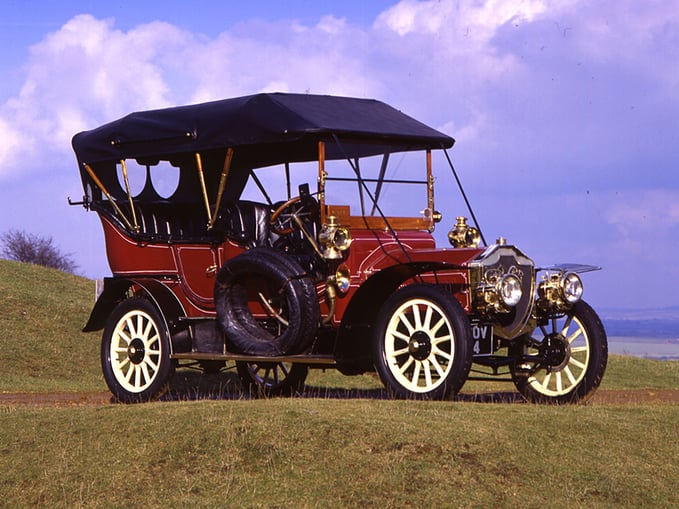
Developed from a 1907 Tourist Trophy winner, Rover released this production car not long after their racing success.
The model was originally announced in 1905 as the 16/20hp (denoting the horsepower tax rating) and was Rover’s first multi-cylinder engined car. Specially lightened versions were entered for the first Tourist Trophy (TT) race held on the Isle of Man in 1905, and in 1907 Rover won the event with one of these cars driven by Ernest Courtis who was Rover’s chief tester at the time.
His average speed was 28.8 mph over six laps of the 40.3 mile circuit. The TT races at the time were limited to four-seater touring cars and the regulations restricted fuel consumption. The Rover’s good fuel economy was a major factor in its victory.
The production model, the 20hp, was quickly developed from this race-winning car and remained in production until 1910. It featured an engine brake, which closed the inlet valves so the engine acted as an air pump through the exhaust valves. It was also the first to carry the shield-shaped radiator, a characteristic Rover feature for many years.
This example was re-registered by the Rover Company in the 1960s with the registration mark ‘ROV 4’ to recognise that the car was the company’s first four-cylinder model.