The world's largest collection of historic British cars


The world's largest collection of historic British cars
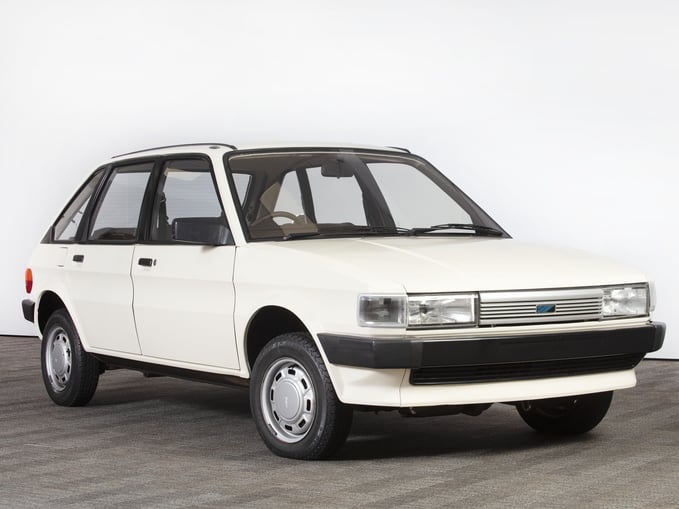
The Maestro was the second ‘recovery’ model produced by British Leyland (the first being the Metro in 1980) after the company hit serious financial troubles in the 1970s.
Part of the recovery plan, spearheaded by the new chairman Michael Edwardes, was to introduce a completely fresh range. To save money, two new models called the Maestro and Montego would share a platform (a shared set of common underpinnings, including a chassis, suspension and powertrain), codenamed LC10.
The cars replaced the Allegro, Maxi, Ambassador and the Ital and were designed and built using state-of-the-art technology. Common to all Maestro models was an electronic ignition and engine management system and was marketed as the first ‘computer age car’. This particular car was the first to roll off the production line at the Cowley plant in Oxford. The Maestro was popular, but was not as much as a success as British Leyland had hoped.
A performance version was sold as the MG Maestro, and a ultra-luxury version as the Maestro Vanden Plas - they boasted an electronic all-digital instrument panel, complete with a voice synthesiser which gave spoken warnings and information. This proved more irritating than popular and was soon discontinued.












.png)