The world's largest collection of historic British cars


The world's largest collection of historic British cars
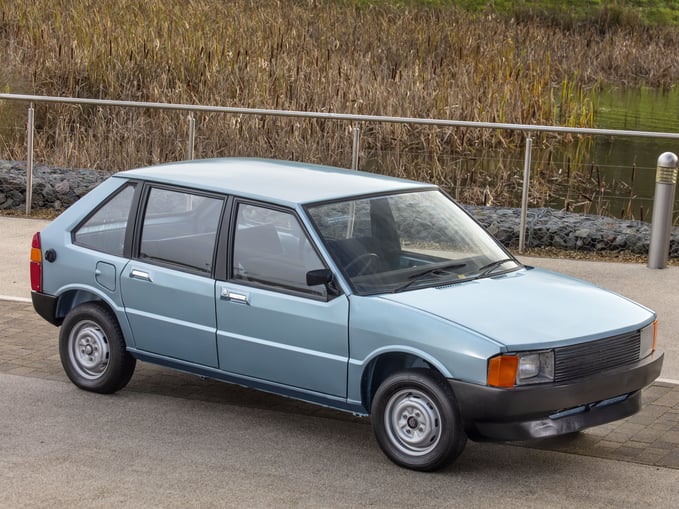
This is an early engineering development car that was used to test the platform of the Maestro and Montego; two new models that would share some of the same underpinnings.
Codenamed LC10, the project was part of British Leyland’s recovery plan in the late 1970s. Prioritising packaging and engineering over style, this particular vehicle was the result of three years of work that began in the summer of 1975 with Spen King and Gordon Bashford instigating work on a new mid-sized hatchback programme with a classic front-wheel-drive layout. This work gained pace after Michael Edwardes became chairman in 1977. LC10 eventually became the Maestro which shared the same centre section as the Montego.
LC10 shows the process of defining a car from scratch. Its simple and experimental with lots of aspects still to test and refine, but it was also styled to get a feel for the final product. Penned by Steve Ferrada at the Solihull design office, it doesn’t look like the Maestro at this stage, but there are some similarities inside including the spacious interior, the dashboard layout and even the slot for the position of the radio.
The project always played second fiddle to the Metro, however, which was the company’s priority in this period; it took nearly eight years for the LC10 to reach the production stage as the new Maestro!
The Maestro was the second 'recovery' model produced by BL (the first being the Metro in 1980). Launched in March 1983, it replaced Allegro, Maxi and Ital. Its rivals included VW's Golf and the Ford Escort.
With plenty of glass and a spacious interior for a car of its size, the LC10 prototype feels light and airy. There are one or two interior features that made it to Maestro, such as the square fascia and the almost vertical dashboard slot for the radio.











.png)