
The world's largest collection of historic British cars


The world's largest collection of historic British cars
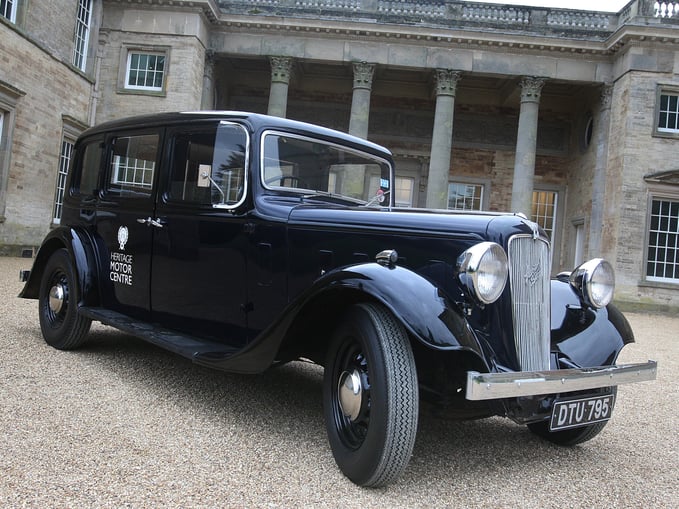
Well beyond the reach of an average family this large limousine was marketed for wealthy customers who wanted chauffeur-driven, luxury transport.
Along with other cars in Austin’s range, the Chalfont was named after a well-known and pleasant area of England - in this case The Chalfonts are a group of affluent villages in Buckinghamshire.
This car, besides the Twenty Mayfair, represented the very best of Austin’s line and was introduced in August 1935. A comfortable ride was provided by long, semi-elliptic road springs with Lucas hydraulic shock absorbers and extra-low pressure Dunlop tyres. It was mounted on the long (10ft) Austin Eighteen chassis and
powered by a six-cylinder, 18hp engine. A 16hp model was also available.
Inside, the Triplex-toughened sliding glass partition fitted between the driving and rear passenger compartment was exclusive to the Chalfont model. With space for for seven people provided by two occasional seats that could be folded away when fewer people were carried, many luxurious extras ensured the car appealed to distinguished clients. These included arm and foot rests, extra wide doors, window blinds, pile carpets, electric lamps and an electric telephone for communication between the passengers and driver all contributed to ease and comfort.
The Chalfont was offered in a choice of colours - royal blue, maroon, Westminster green, ash grey and black - but the model was listed for only two years, with a new Austin Eighteen being introduced in 1937.















.png)