
The world's largest collection of historic British cars


The world's largest collection of historic British cars
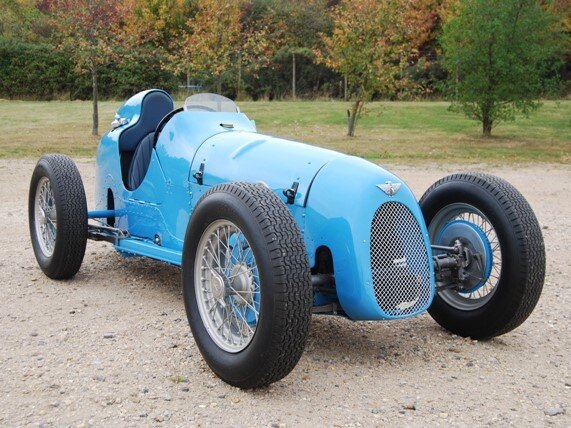
Stung by the success of MG in motor racing, Sir Herbert Austin created a factory racing team and persuaded Murray Jamieson to design the ultimate Austin Seven - the side-valve racer.
Originally Jamieson, who had been persuaded to join the Austin works racing team in 1932 after he was spotted piloting an Austin Seven Ulster, designed a speed record car. It resembled, in miniature, Campbell’s land speed record breaker Bluebird. He added a high pressure Roots supercharger to the Seven’s basic side-valve 747 cc engine, boosting compression and combustion pressures so much that a total of 32 studs were needed to hold the cylinder head down! In 1933 the car was campaigned at Monthléry and Southport speed trials but did not meet expectations, so the decision was taken to turn the car into a track racer.
The engine and transmission were fitted into a new frame and a body that was reminiscent of American sprint cars which were fashionable at the time. It was state-of-the art and lightweight at only 431 kg. To accommodate the driver in the narrow single seat body, the transmission was offset to his left. Making its first appearance at the Whitsun meeting at Brooklands in 1934, works driver Driscoll took the lap record in the Mountain Handicap.
Two new racers were built to the same design in 1935: this car was driven by Bert Hadley and its identical sister vehicle was driven by team mate and trail-blazing female motorsport star Kay Petre. Both cars were successfully campaigned in hill climbs, such as Shelsley Walsh, and on track at Brooklands and Donington, where the handicapping system favoured small engines, but in 1937 tragedy struck. During a practice session at Brooklands, Petre's car was hit by Reg Parnell’s MG which had stalled high up on the banking. It slid down, crashed into Petre knocking her off the track and her car rolled on top of her causing serious head and facial injuries. Luckily she survived, but the crash effectively ended her racing career. Petre later became a motoring journalist and a colour consultant for Austin in the 1950s for their new range of cars.















.png)