
The world's largest collection of historic British cars


The world's largest collection of historic British cars
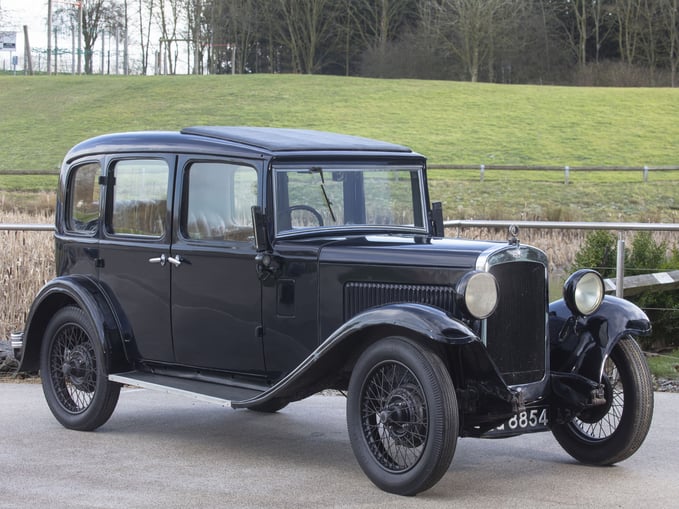
The 12/6 was Austin’s response to a brief fashion in the 1930s for small-capacity, smooth six-cylinder car that were a reaction to the horsepower tax for cars based on cylinder dimensions.
Although Austin had made six-cylinder cars since 1909, most of these had been aimed at the chauffeur-driven carriage trade. By contrast the 12/6, introduced in January 1931, was intended for the owner-driver. To this end, a conscious attempt was made to simplify maintenance and make it easier for the owner to service.
The engine was typical of the popular ‘pint-sized’ sixes. Top gear could be used from 5 mph to 55 mph but performance was rather restricted and as the car was built down to a price, it was not always as reliable as other Austins had been.
The Harley was the first Austin to have an all-steel body, made by the Pressed Steel Company. In 1932, Austin released the de luxe Harley that boasted a four-speed gearbox (rather than the original three), bumpers, a sunshine roof and leather trim.
The 12/6 sold at a rate of 5000 - 6000 per year and was, for a time, the second most popular Austin model after the Seven.















.png)