
The world's largest collection of historic British cars


The world's largest collection of historic British cars
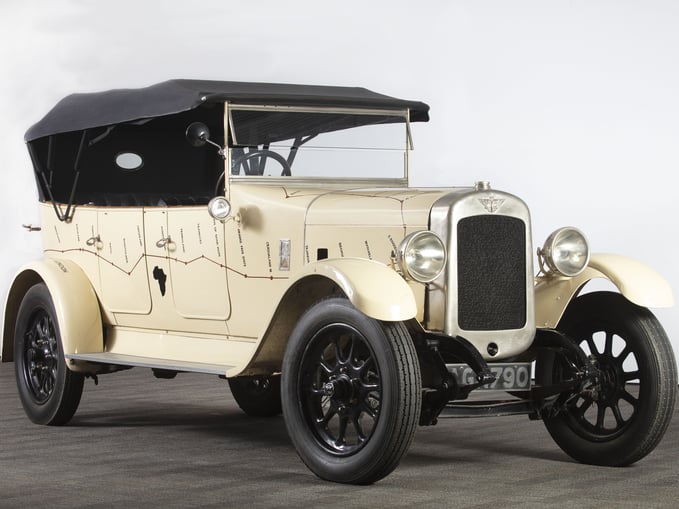
Austin’s first new model after the First World War was this large, mass-produced car, but its high cost led to slow sales and forced the company into a severe financial crisis.
High-powered cars were already falling out of favour when the Twenty was launched due to horsepower tax (a road tax system calculated by engine cylinder size). Its advertised price of £485 had already put it in direct competition with popular American imports, but the cost of the Twenty had to be increased - it was too expensive to make and unsuitable for mass production.
Austin’s post-war strategy of only making this one high-priced model was a disaster and the company was placed into receivership. Sir Herbert Austin fought to keep the business going and quickly introduced a smaller 12hp model while he secretly worked on a new, small and economical car - the Austin Seven.
The Twenty had been known as 'Austin's American Car' because it incorporated central gear-change and coil ignition, possibly copied from a Hudson Super Six which Sir Herbert Austin had used during the war. The Twenty, having failed as a high-volume production car, eventually became a chauffeur-driven luxury model with formal coachwork on its long chassis.
This car on display was bought second-hand for £33 by British explorer Mr Filby around 1932. He drove it on a round journey of 37,000 miles from London to Cape Town in South Africa with only minor mechanical repairs and one tyre change! Afterwards, Austin bought back the car as a splendid example of ‘Austin dependability’.















.png)