

BMIHT’s Assistant Archivist, Grace Jordan, looks into ‘El Syd’: the Man who Made the Plastic Mini. Having recently catalogued BMIHT's collection of Sydney Horwood's papers, designer for Pressed Steel, Grace looks into Pressed Steel's Research & Design work and asks the question: "Why would Pressed Steel want to make a Mini out of plastic?"
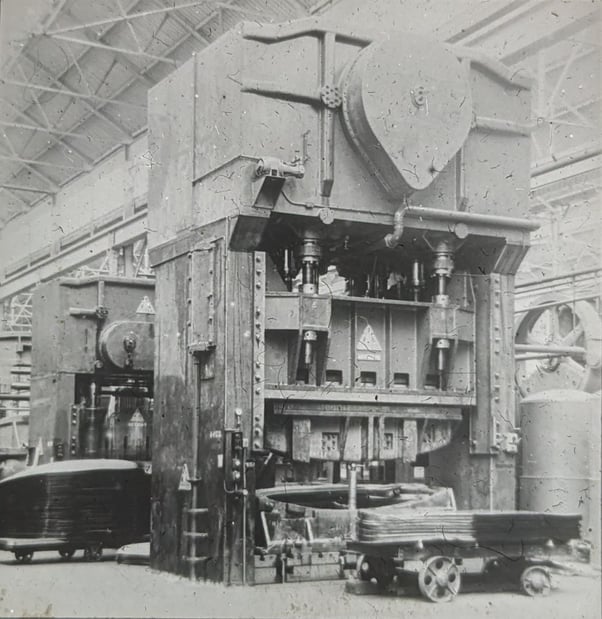
A slide from the Horwood collection, showing the Pressed Steel factory at Cowley
This year, a project was undertaken to catalogue a collection given to the BMIHT Archive by the Oxford Bus Museum. Within this collection was found the papers of a remarkable man who was at the forefront of the use of plastics and fibreglass in the automotive industry.
On the 7th July 1961, Sydney Horwood returned to his old workplace of Pressed Steel, after some time spent with Smith’s Motor Accessories. He returned as Senior Designer in R&D, with a specific focus on metal and plastics.
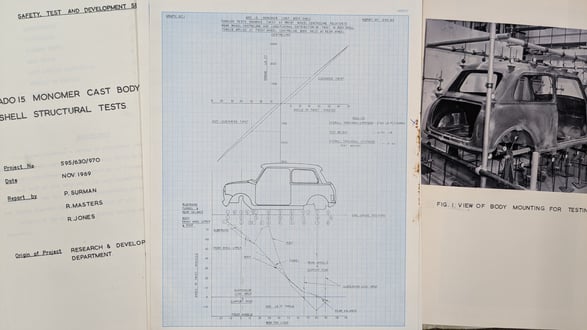 A structural testing report on the cast monomer Mini
At the time, Pressed Steel was an independent company, although a few years later it would find itself as part of British Motor Holdings, and later the British Leyland Motor Corporation, merging with Fisher & Ludlow in 1968 to form Pressed Steel Fisher.
The R&D department at Cowley was still fairly recent when Horwood rejoined Pressed Steel. However, it would go on to make significant contributions to the automotive industry, such as pioneering computer crash simulation techniques. Horwood’s focus as part of the department, however, was on one thing alone: plastics. Under his leadership, the R&D department would make significant strides in the applications of plastics in the automotive industry, and no project was more ambitious than the plastic Mini.
But why would Pressed Steel want to make a Mini out of plastic?
The answer lies with the South American market (and specifically, the Chilean market), which BMC, and subsequently BL, sought to expand into. However, it was not possible to simply import large numbers of British-built cars into Chile. The Chilean government at the time had a production mandate, so that a certain percentage of cars sold in Chile had to be manufactured domestically. The Mini, like most BMC (and later BL) models, had its bodywork made by Pressed Steel. Manufacturing locally would mean that large steel presses would have to be shipped overseas, which would be a highly expensive endeavour. Instead, the idea was to construct the body shells out of an alternate material, which could be shaped using a mould, since a mould would be much easier and cheaper to ship overseas than tooling for steel construction. The only issue was selecting a material which would be fit for the task of replacing steel bodywork.
This was the problem presented to Sydney Horwood and the R&D department, who set to work experimenting with different materials. They carried out testing on prototype Minis with bodywork made from various materials, including polyurethane and monomer. This included extensive crash testing, as well as structural and pavé tests. The result was that there was one material which stood out amongst the rest: GRP, or to give it its more commonly used name, fibreglass.
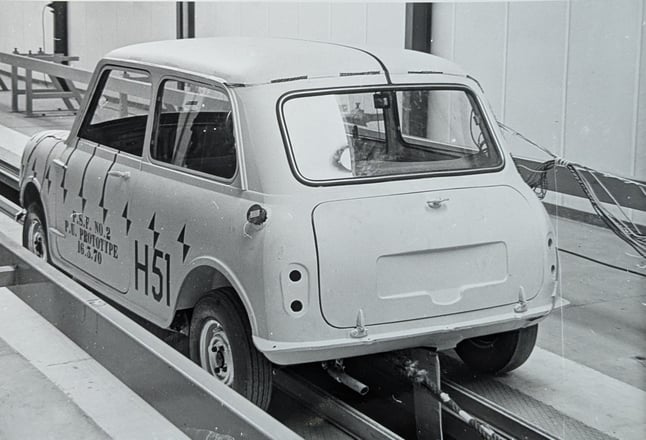
A polyurethane prototype Mini undergoes crash testing
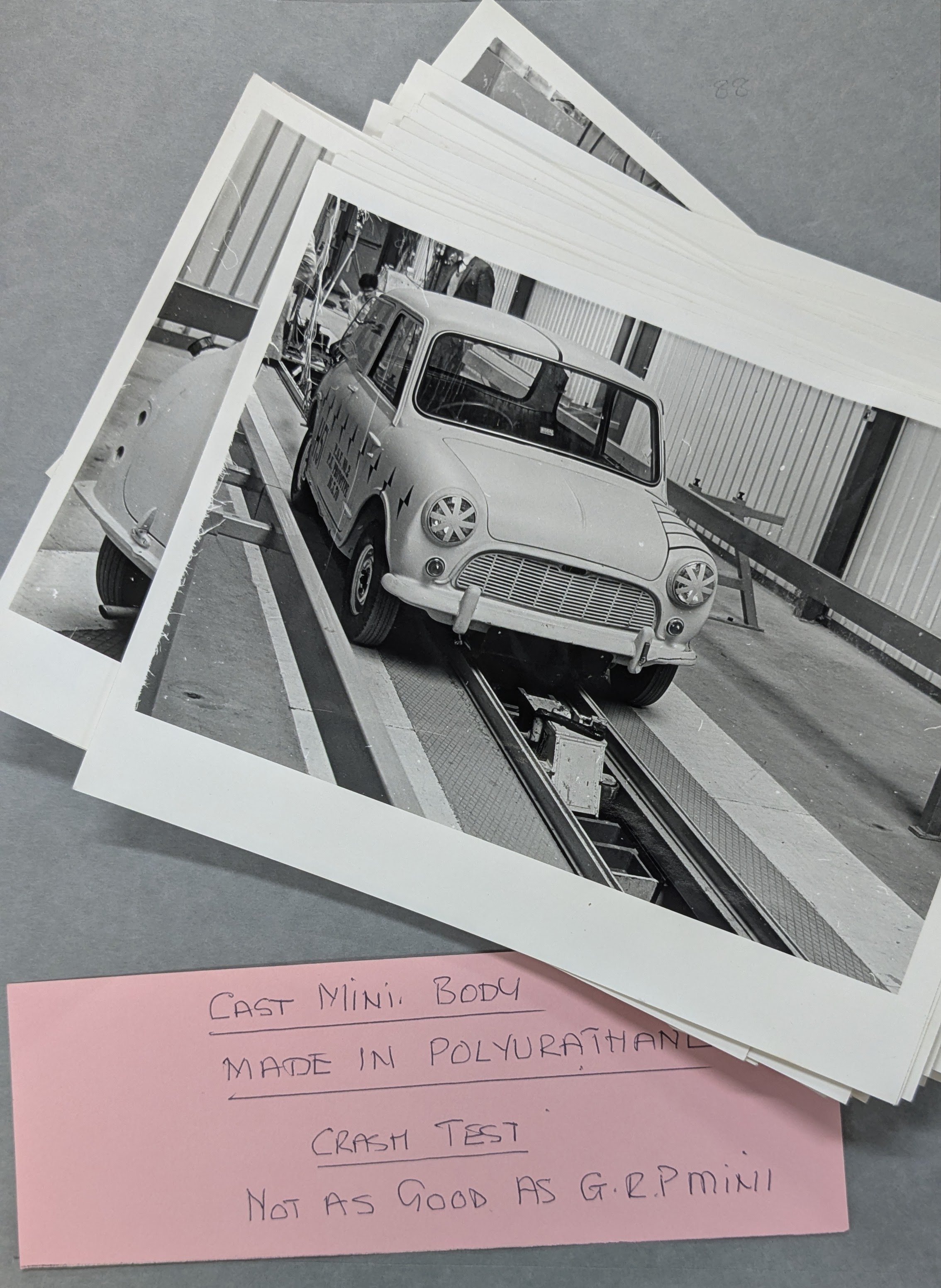 “Not as good as GRP Mini”- Horwood’s verdict on the polyurethane prototype
During this period, Pressed Steel worked closely with a company called Peel Engineering. Peel had previous expertise in working with fibreglass, and supported Pressed Steel in the construction of GRP prototypes. It is for this reason that the fibreglass Mini is sometimes referred to as the Peel Mini.
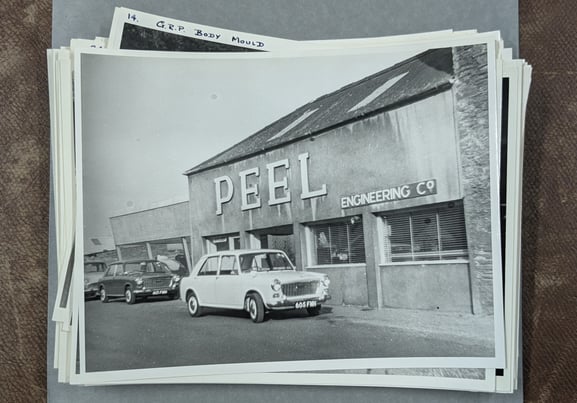 Photographs taken on the Isle of Man show a GRP ADO 16 outside Peel Engineering’s facilities.
Once the fibreglass Mini prototype had been perfected, the next stage was to transfer the tooling and construction to Chile. The Chilean subsidiary of British Leyland had a plant in Arica, formerly the EMSSA factory, and Horwood travelled to spend four months there to help set up production.
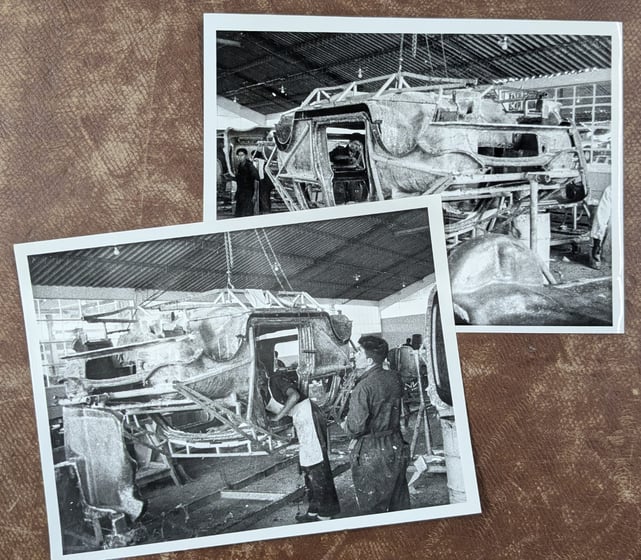 Employees of British Leyland Automotores de Chile, S.A. being introduced to the production of the GRP vehicles.
The Mini was joined by ADO 16 (the 1100/1300 range) in being developed for a fibreglass variant. This gave British Leyland some variation in the size range offered in Chile. There was also some experimentation with the idea of an ADO 14 (Austin Maxi) in fibreglass, although this never saw production.
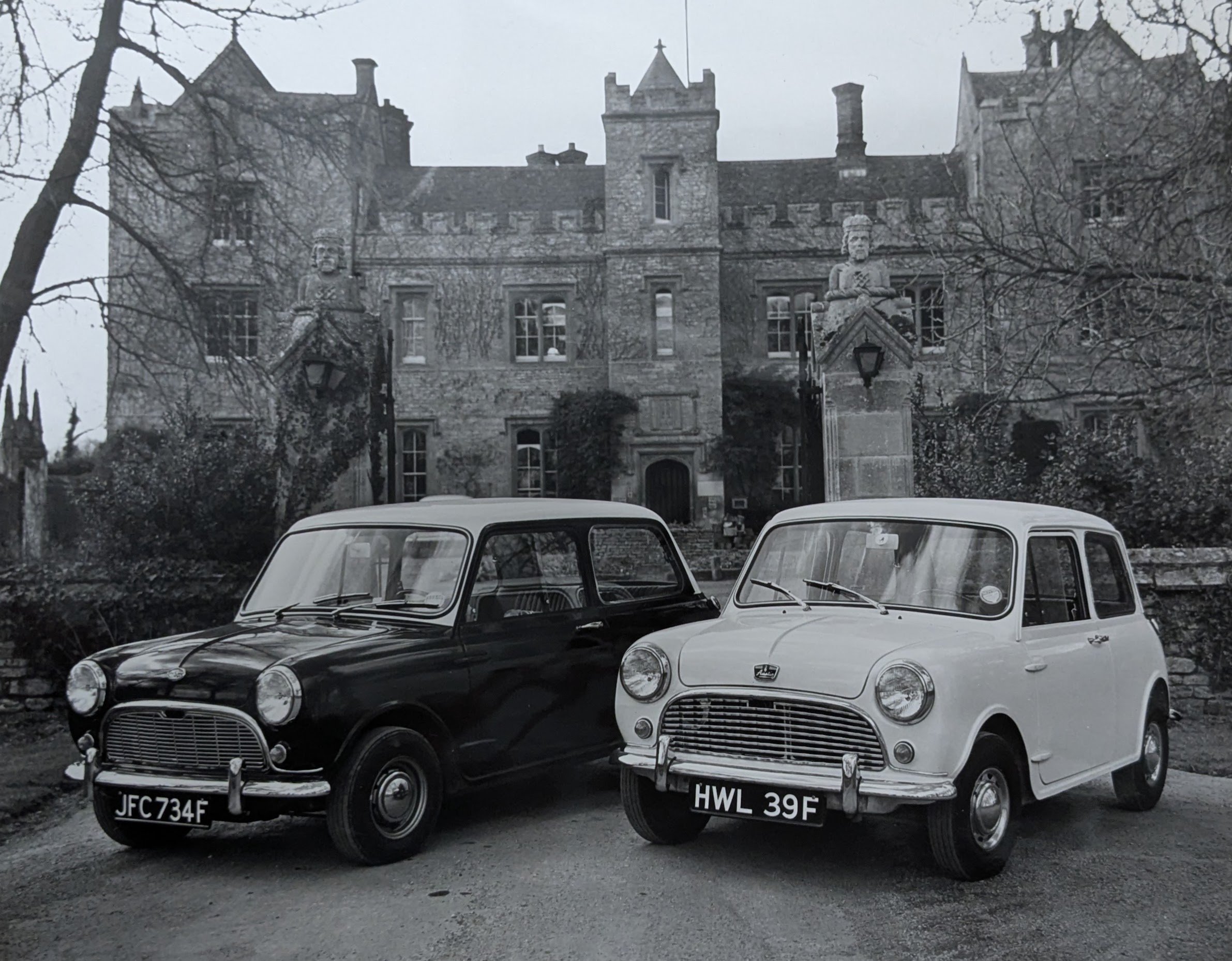 ADO 15 and ADO 16 in fibreglass
Chile was not the only South American country which manufactured the fibreglass cars. In the 1980s, the rising price of petrol in Venezuela increased demand for greater fuel economy, and the Mini stood out as an ideal vehicle. Venezuela had similar protectionist policies to Chile, so local manufacture was paramount. A consortium of Venezuelan entrepreneurs formed FACORCA, which gained a license to produce Minis with glass fibre bodies, since steel tooling was too expensive. These Venezuelan Minis were produced from 1991-1995, and went by the name ‘Mini Cord’.
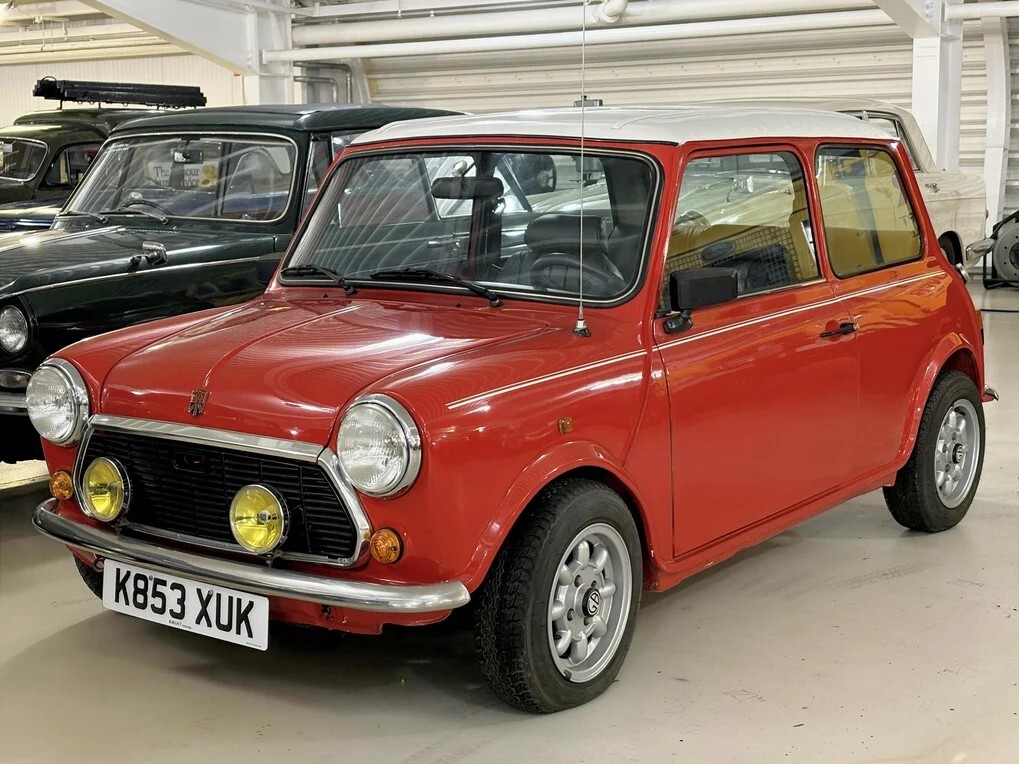 A 1992 Mini Cord, which now lives at the British Motor Museum
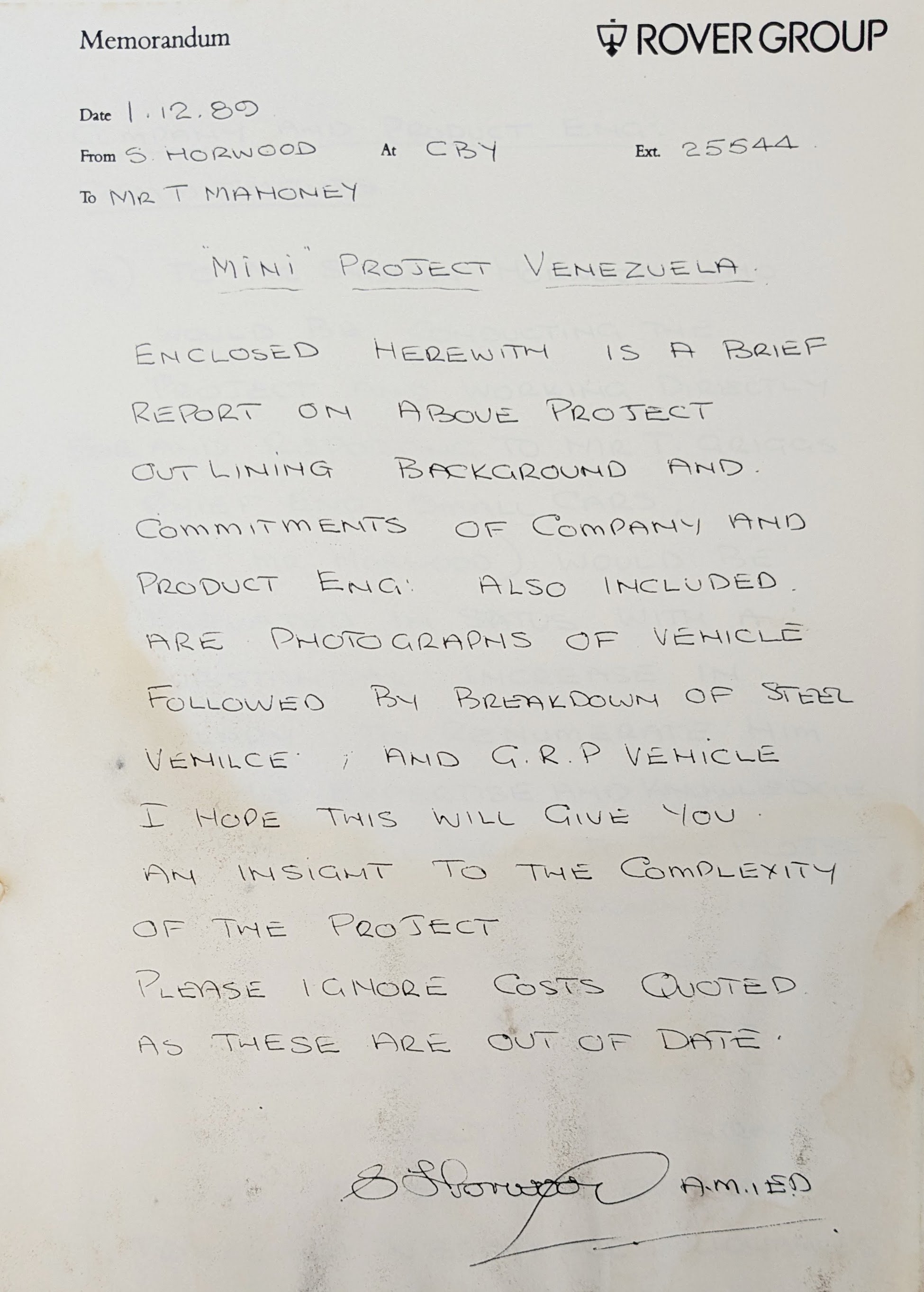
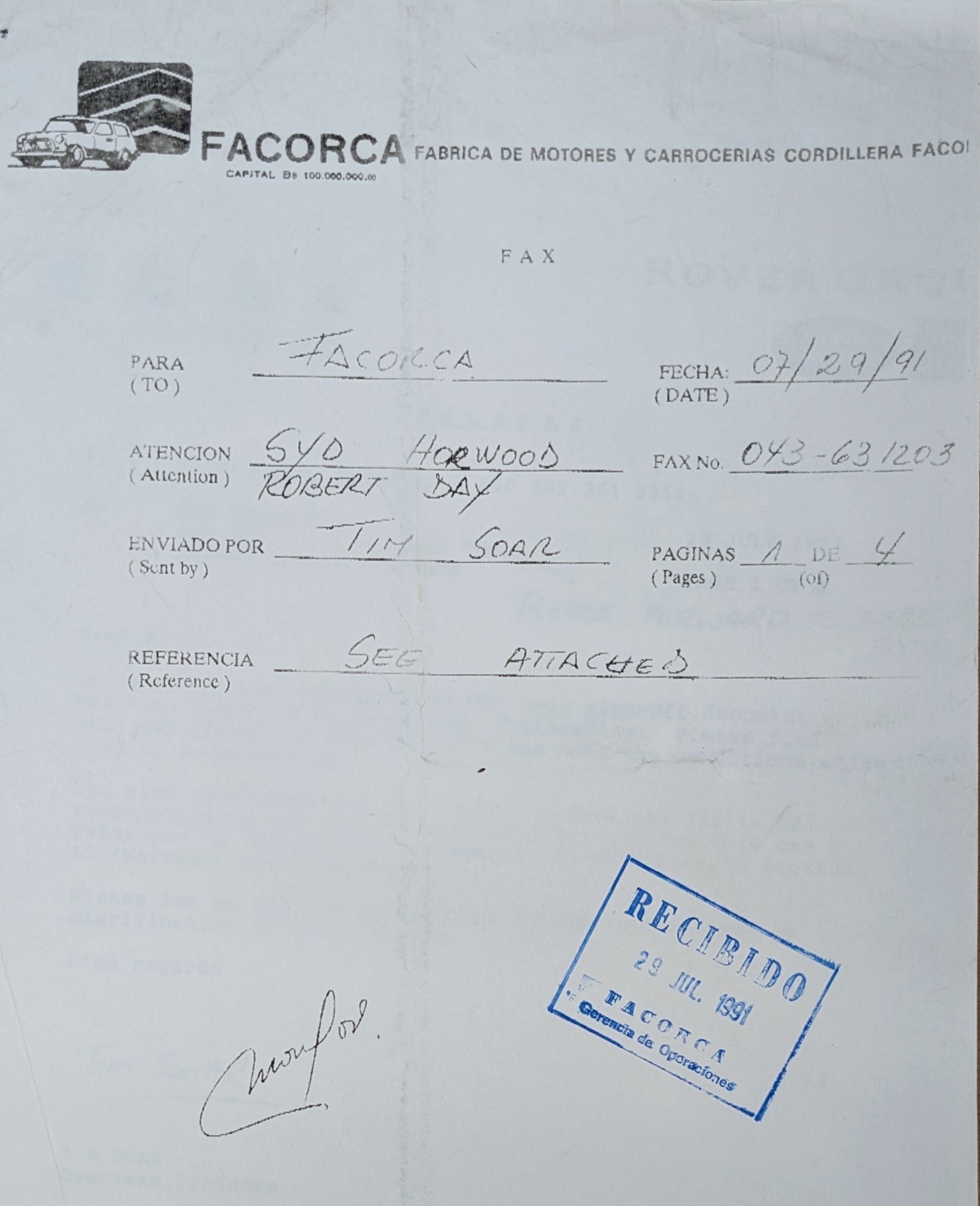 Correspondence regarding the Venezuelan Mini project. As the Senior Designer for the previous fibreglass Mini, Sydney Horwood was involved from the inception.
So synonymous was Sydney Horwood’s name with the production of fibreglass vehicles for the South American market, that he gained the nickname ‘El Syd’ amongst his colleagues. Outside of his work on the GRP Mini and 1100/1300, however, Horwood was also heavily involved in the development of plastic fuel tanks, which were in their infancy at the time. Members of Pressed Steel R&D went to visit Volkswagen, which was the only other manufacturer developing plastic fuel tanks, and used that knowledge to improve their own fuel tanks, producing innovative designs which were superior to Volkswagen’s. Horwood, in particular, played a significant role in designing and conducting fire tests for the Pressed Steel fuel tanks.
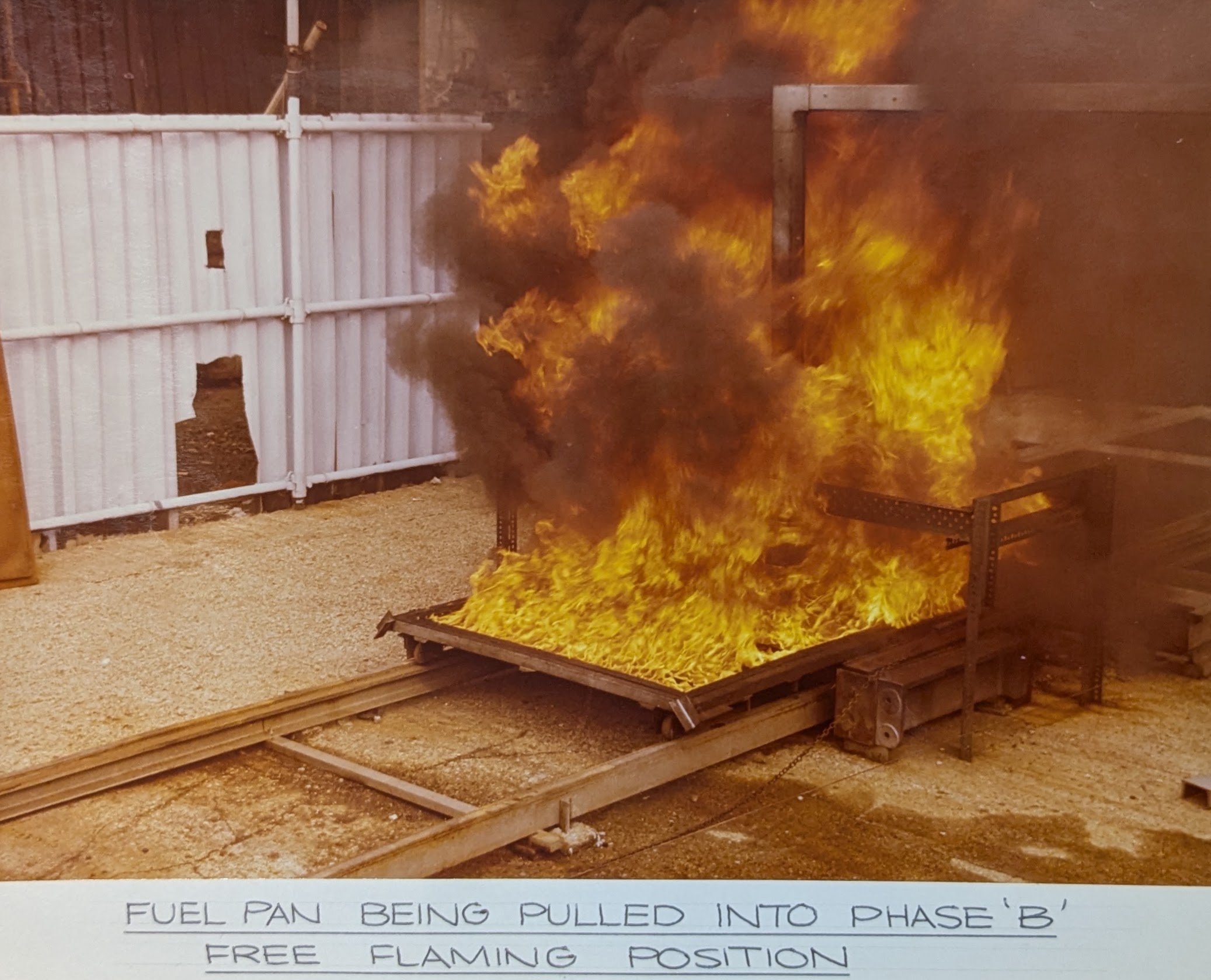
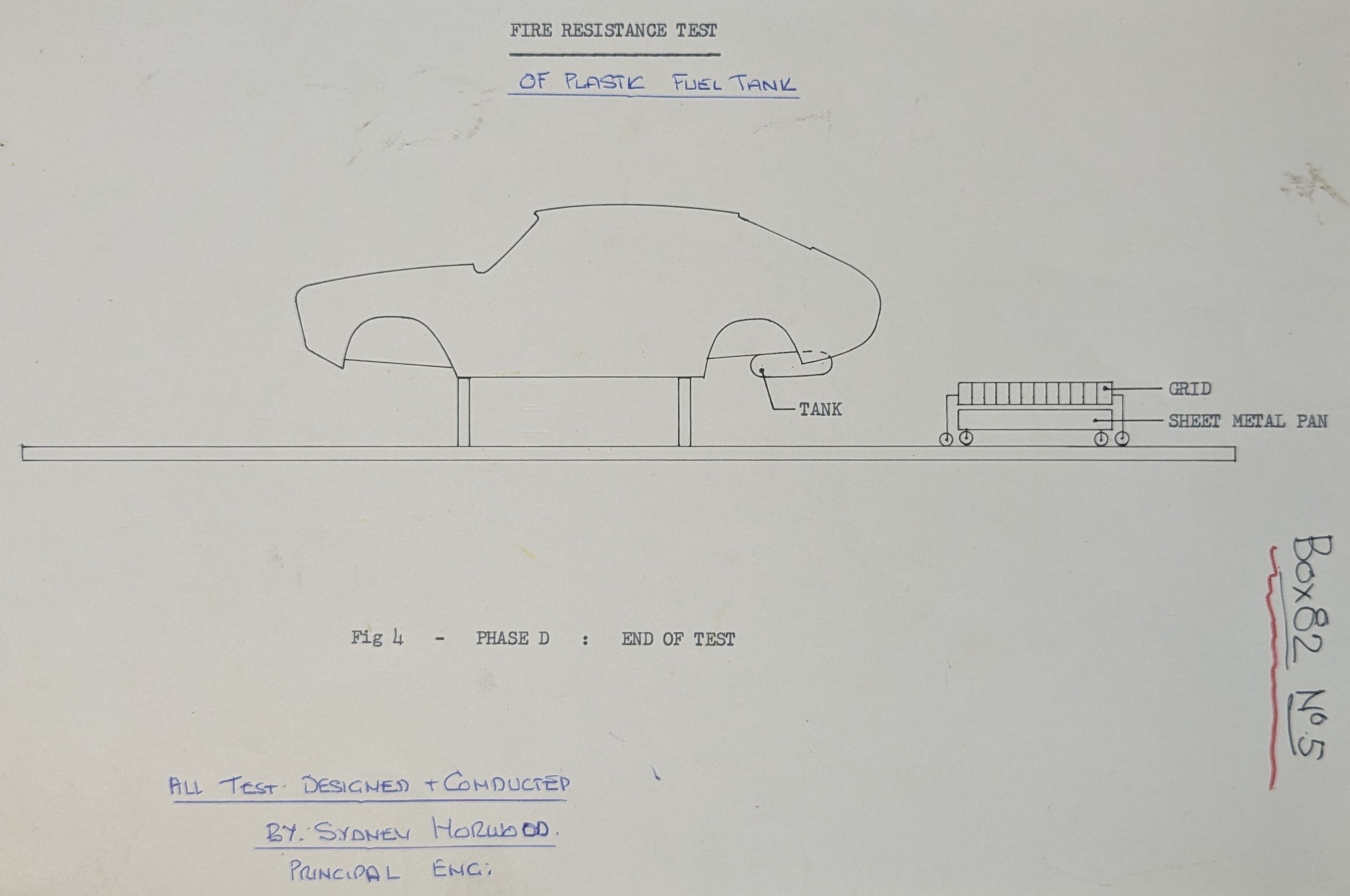 A fire resistance test for plastic fuel tanks, devised by Sydney Horwood.
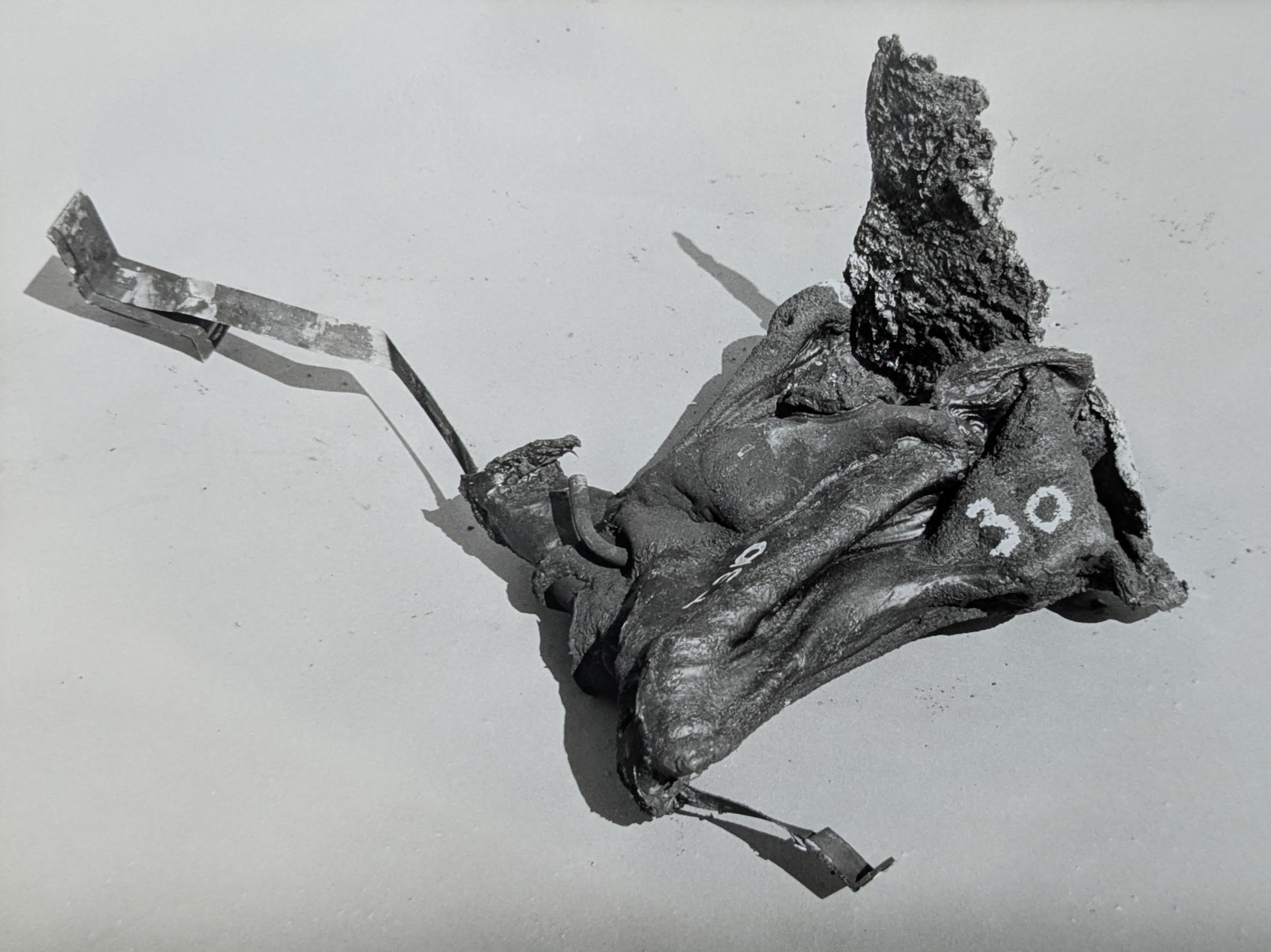
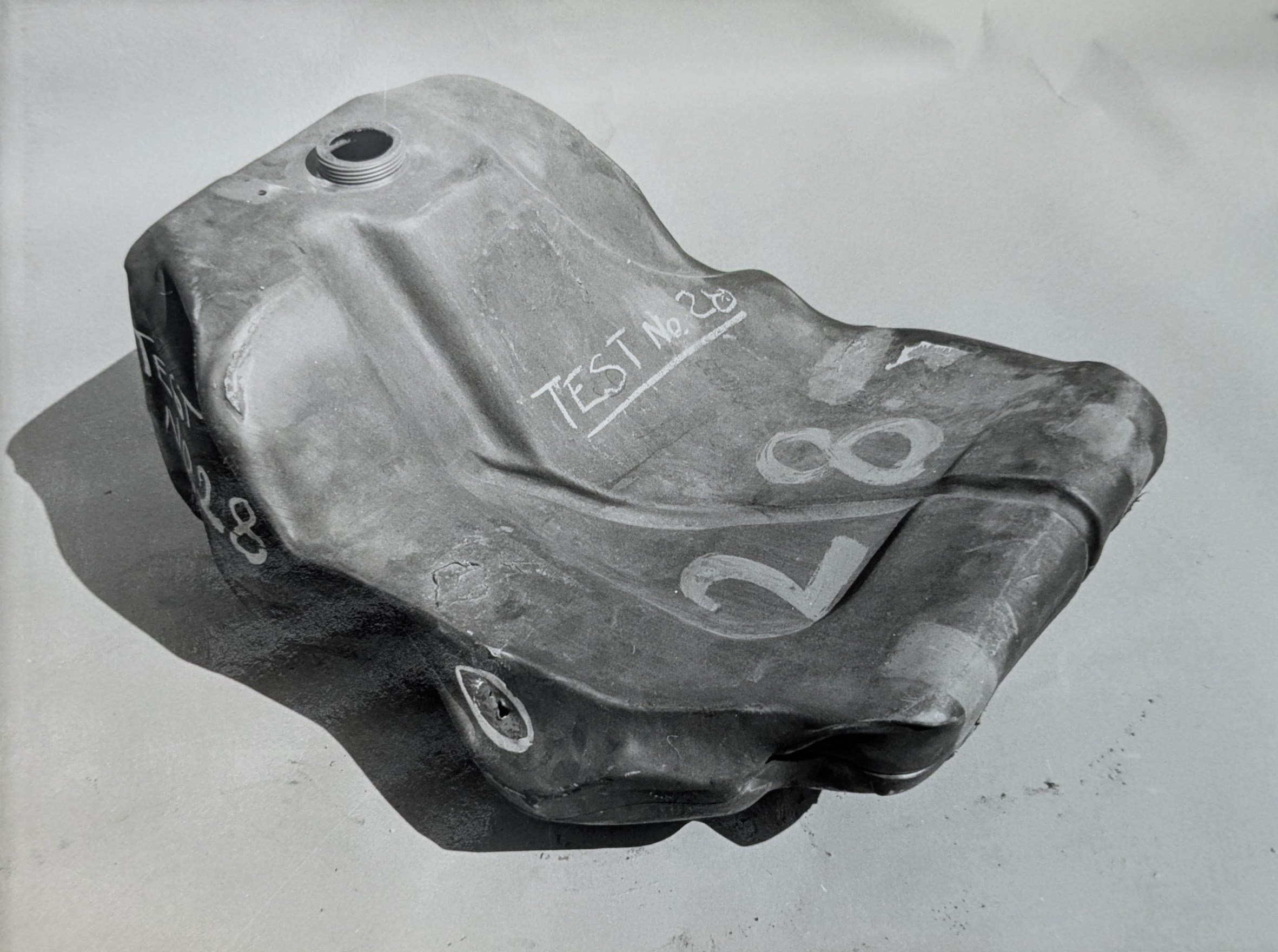 Plastic fuel tanks before and after fire testing.
By the time that he retired, Horwood had spent more than 50 years working in the automotive industry. Over the course of his career, he was at the forefront of innovation, laying the foundations for technologies and materials which are still in use in the motor industry today. From fibreglass cars to refrigerators, children’s toys, railways, and prefabricated houses, his extensive collection of papers evidence the wide variety of projects with which Pressed Steel was involved in the latter half of the 20th century.
The Sydney Horwood papers are now fully catalogued and available for researchers.














.png)