The world's largest collection of historic British cars


The world's largest collection of historic British cars
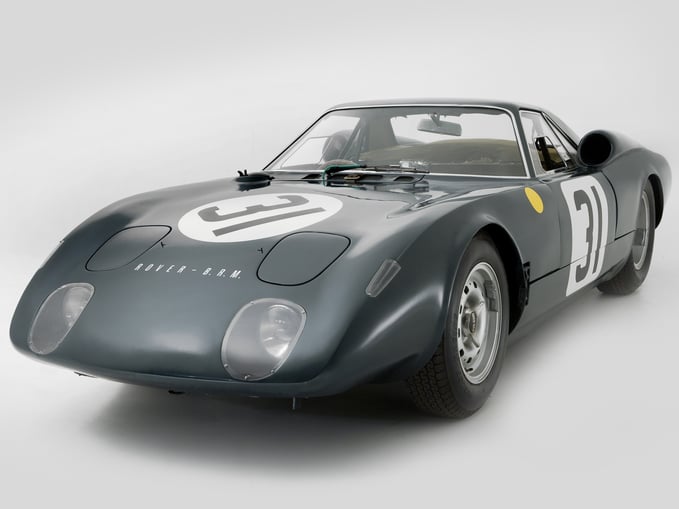
Developed within an innovative programme, this is Rover’s most exciting gas turbine car. Made in partnership with Owen Organisation’s BRM, it was to be Rover’s last.
Owen supplied a widened BRM Grand Prix chassis (from Richie Ginther’s car which crashed at Monaco) and two drivers, Ginther and Graham Hill. Hill described driving the car as: “You’re sitting in this thing that you might call a motor car and the next minute it sounds as if you’ve got a [Boeing] 707 behind you, about to suck you up and devour you like an enormous monster.”
Entered for the Le Mans 24-hour race in 1963, it required special permission to take part, racing unofficially as number ‘00’. It came 8th and gained a prize for the first gas turbine to finish the race.
For 1964 it was fitted with a new coupé body designed by William Towns and the engine was modified to incorporate heat exchangers with cutting-edge ceramic discs made by Corning of America. In 1965 it ran in the 2-litre class with drivers Hill and Jackie Stewart. In spite of overheating and damage to the turbine blades, the Rover-BRM survived at an average speed of 98.8 mph (159 km/h), achieving 10th place; the highest placed British car.












.png)