
The world's largest collection of historic British cars


The world's largest collection of historic British cars
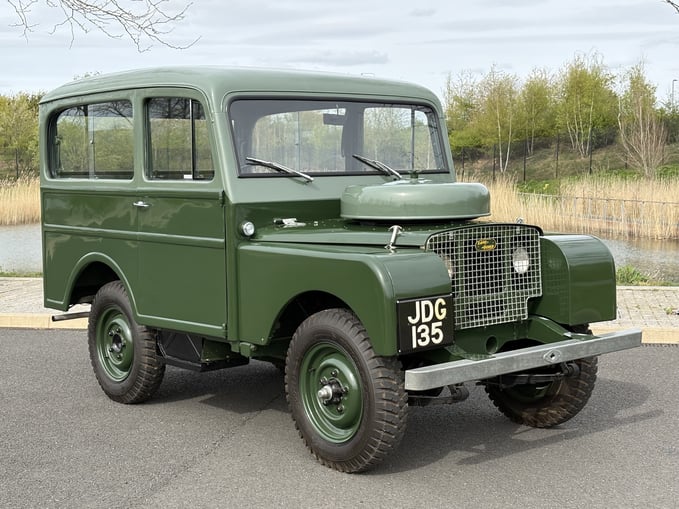
After spotting a gap in the market, a follow-up model to the Land Rover was conceived. It had more comfort and room for passengers and was a forerunner of the later Range Rover.
The coachbuilder Tickford was commissioned to design the new model for Land Rover – to be known as the Station Wagon – and conceived an all-metal rear body on a wooden frame. Inside there was space for seven people, with the addition of four folding seats in the rear, which could be removed for extra storage space.
The body was finished to a high standard, with a single-piece windscreen (instead of a split screen), winding windows and even a metal cover to protect the bonnet mounted spare wheel, although this caused the bonnet to be extremely heavy to lift!
Unfortunately the station wagon was not regarded as a commercial vehicle and attracted Purchase Tax (replaced in 1973 by VAT), that caused its price to rise to £959, almost twice that of the basic Land Rover. By the end of production in 1951, only 641 station wagons had been produced and more than 600 of these had been exported. It is thought that only about 20 survive today.













.png)