
The world's largest collection of historic British cars


The world's largest collection of historic British cars
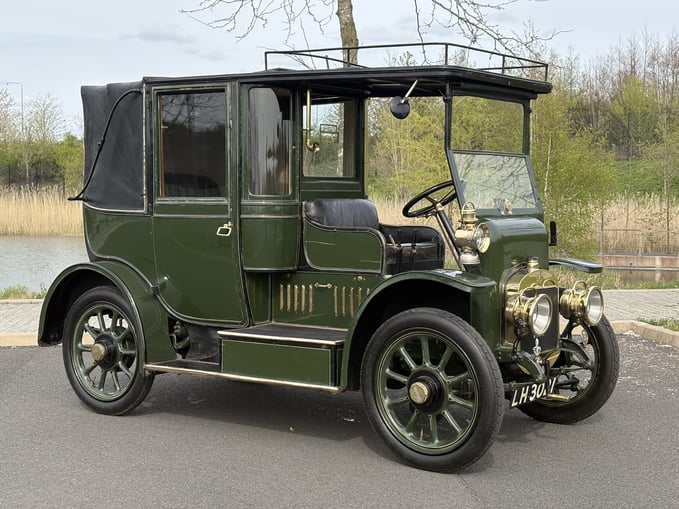
Intended as a chauffeur-driven car ‘ideal for ladies’ due to its compact interior, the snub-nosed 15hp was hoped to be approved for use as a taxi but its turning circle was too wide.
This luxury vehicle was designed for urban travel - the enclosed passenger compartment is separate to the driver and afforded both comfort and privacy for the individuals inside.
The aptly named ‘town carriage’ coachwork was just one of several choices of body style that could be made for the Austin 15hp, including a two or four-seater. This particular coachwork had an unusually forward driving position that sits right above the engine, contributing to its compact dimensions. It was recommended in the Austin catalogue, therefore, as being ‘ideal for ladies’ looking for convenient and comfortable transport around town. Herbert Austin used one of these vehicles himself, albeit driven by his faithful chauffeur, Jack Gethins.
The 15hp was built from 1908 as part of Austin’s extensive model programme before World War One. Originally, the engine had a shorter stroke than most other Austins and was the only pre-war model to have a monobloc engine rather than separately cast cylinders. This pioneering experiment proved unsuccessful due to the then unfamiliar casting techniques required so for the 1911 update Austin reverted to separate cylinders.
Attempts to have the design approved for taxi use also failed due to its wide turning circle. This is possibly the reason why this particular coachwork was soon discontinued. Austin continued to manufacture a more conventional 15hp model for some time.















.png)